Creating the Perfect Cat Space: Design Tips for Cat-Friendly Homes and Apartments
Living with cats doesn’t mean sacrificing style or settling for a home overrun with pet paraphernalia. The best cat-friendly spaces seamlessly blend feline needs with human aesthetics, creating environments where both species can thrive. Whether you’re in a sprawling house or a compact apartment, thoughtful design can transform your space into a cat paradise that’s also a joy for humans to inhabit.
The key to successful cat-friendly design lies in understanding what cats truly need: vertical territory, security, stimulation, and comfort. When these needs are met through intentional design choices, you’ll have happier cats and fewer behavioral problems, all while maintaining a beautiful living space.
Understanding Your Cat’s Spatial Needs
Before diving into specific design elements, it’s crucial to think like a cat. Cats experience and use space very differently than humans do, and successful cat-friendly design acknowledges these differences.
The Vertical World
While humans primarily navigate horizontally, cats are three-dimensional creatures who instinctively seek high vantage points. In the wild, elevation provides safety from predators, better hunting opportunities, and territorial advantages. Your indoor cat retains these same instincts, making vertical space just as important as floor space.
A small apartment with well-designed vertical elements can feel more spacious to a cat than a large house with only horizontal surfaces. This is particularly important in multi-cat households, where vertical territory helps reduce conflicts by providing multiple “ownership” levels.
Territory and Security
Cats are territorial animals who need to feel secure in their environment. This doesn’t mean they need vast amounts of space, but rather well-defined areas where they feel safe and in control. Security comes from having escape routes, hiding spots, and clear sightlines to monitor their domain.
Sensory Enrichment
Cats experience the world through all their senses, and a well-designed cat space provides appropriate stimulation for sight, sound, smell, touch, and taste. This might include varied textures, interesting views, safe plants, and interactive elements that engage their natural behaviors.
Maximizing Vertical Space
The single most impactful change you can make to create a cat-friendly space is to think vertically. Here’s how to effectively use your walls and ceiling height:
Cat Trees and Towers
Modern cat trees have evolved far beyond the beige carpeted eyesores of the past. Today’s options include sleek wooden designs, minimalist geometric structures, and custom-built installations that complement your decor. When choosing a cat tree, prioritize stability and height over flashy features. A wobbly tree will quickly be abandoned by your cat.
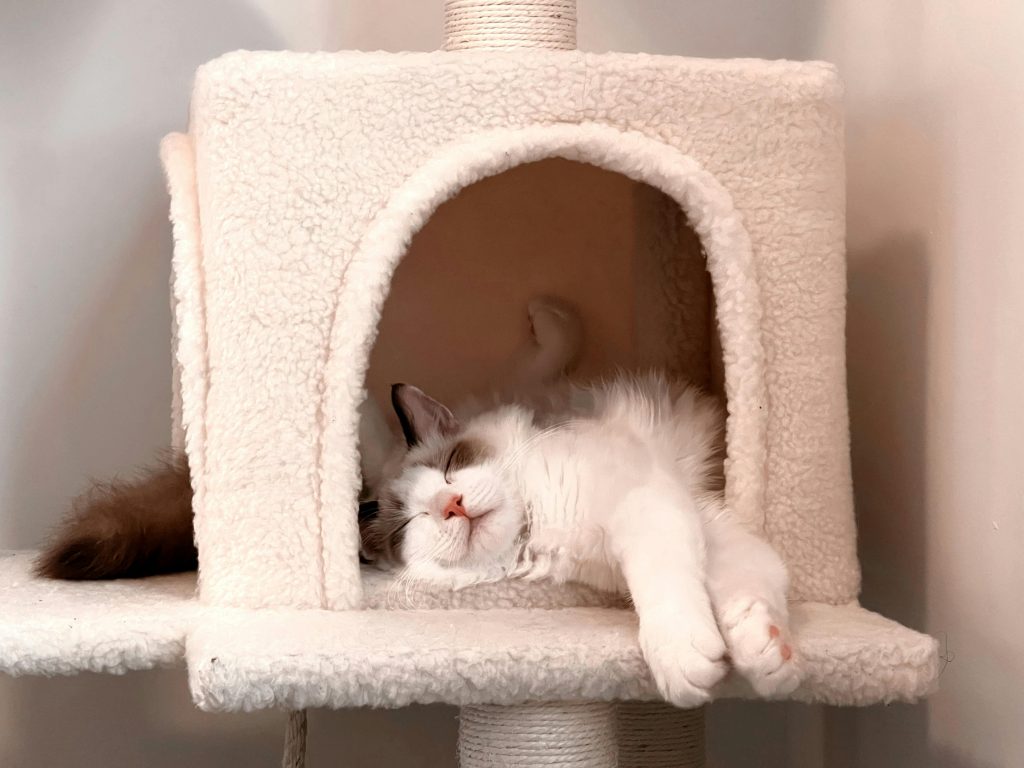
Consider the tree’s placement carefully. Cats prefer structures near windows for bird-watching, in corners for security, or in central locations where they can observe household activity. The best cat trees offer multiple levels, various perch sizes, and at least one enclosed hiding spot.
Wall-Mounted Solutions
Wall-mounted cat furniture maximizes floor space while providing vertical territory. Floating shelves, wall-mounted perches, and modular climbing systems can be arranged to create custom cat highways throughout your home. These solutions are particularly valuable in apartments where floor space is limited.
When installing wall-mounted elements, ensure they’re securely fastened to wall studs and rated for your cat’s weight plus a safety margin. Space shelves 12-18 inches apart to allow easy jumping between levels, and include at least one wider platform where your cat can comfortably turn around.
Ceiling-Mounted Options
Don’t overlook your ceiling as valuable cat real estate. Ceiling-mounted cat walks, suspended bridges, and hanging beds can add vertical territory without using any floor or wall space. These elements work particularly well in lofts or rooms with high ceilings.
Utilizing Existing Furniture
Strategically arranged furniture can create natural climbing opportunities. Bookcases, dressers, and armoires can serve double duty as cat highways when positioned to allow safe jumping between pieces. Add non-slip mats to smooth surfaces and ensure there’s adequate clearance for your cat to land safely.
Creating Cozy Retreats and Hiding Spots
Every cat needs spaces where they can retreat from the world and feel completely secure. These hiding spots are essential for stress reduction and overall well-being.
The Art of Cat Caves
Cat caves and enclosed beds provide the ultimate in feline security. These can range from simple cardboard boxes to elaborate custom-built hideaways. The key is ensuring the opening is large enough for your cat to enter comfortably but small enough to feel secure inside.
Consider multiple hiding spots throughout your home at different heights and in various rooms. This allows your cat to choose their preferred retreat based on their mood and the household activity level.
Under-Furniture Utilization
The space under beds, sofas, and tables represents valuable real estate in the cat world. Make these areas more appealing by adding soft bedding, ensuring clean access, and maintaining adequate height for your cat to move comfortably.
For furniture with inadequate clearance, consider raising pieces on furniture risers to create accessible under-spaces. This simple modification can significantly increase your cat’s usable territory.
Closet Conversions
Spare closets can be transformed into ultimate cat retreats. Remove the door or install a pet door, add shelving at various heights, include soft bedding, and consider a small window or skylight for natural light. These converted spaces become private cat sanctuaries while keeping pet items organized and out of main living areas.
Window Wonderlands
Windows are television, entertainment center, and nature preserve all rolled into one for cats. Maximizing window access and comfort can dramatically improve your cat’s quality of life.
Window Perches and Beds
Window perches expand narrow sills into comfortable lounging spots. Choose perches with raised edges to prevent rolling off, and ensure they’re rated for your cat’s weight. Heated window beds add extra appeal during colder months.
For large windows, consider installing a window seat with storage underneath. This provides prime cat real estate while adding functional human furniture to the room.
Creating Bird-Watching Stations
Position bird feeders and birdbaths within view of your cat’s favorite windows to create engaging wildlife viewing opportunities. Native plants around outdoor windows attract birds and provide visual interest. Just ensure these plants are cat-safe in case your feline friend decides to sample them.
Safety Considerations
Secure all windows with screens or safety guards. Even cats with no apparent interest in going outside can be tempted by birds or interesting scents. Window safety is non-negotiable in cat-friendly design.
Designing Multi-Cat Environments
Homes with multiple cats require special consideration to prevent conflicts and ensure all cats feel secure in their shared space.
Resource Distribution
The cardinal rule of multi-cat households is providing multiple resources spread throughout the home. This means multiple litter boxes, food stations, water sources, and resting areas. The goal is to prevent any single cat from guarding or controlling access to essential resources.
Creating Separate Territories
While cats may coexist peacefully, they still need their own spaces. Design should include areas where each cat can retreat without encountering housemates. This might mean cat trees in different rooms, separate sleeping areas, or designated perches for each cat.
Conflict Prevention Through Design
Smart design can prevent many multi-cat conflicts. Wide hallways prevent ambush situations, multiple escape routes reduce territorial tension, and elevated pathways allow cats to move through the home without confronting each other at ground level.
Consider installing cat doors between rooms to allow free movement while maintaining separate territories. This is particularly helpful for cats who prefer different areas of the home.
Small Space Solutions
Living in an apartment or small home doesn’t mean compromising on cat-friendly design. In fact, thoughtful small-space design can create more engaging environments than poorly planned large spaces.
Maximizing Every Square Inch
In small spaces, every surface should serve multiple purposes. Ottoman beds provide seating for humans and lounging for cats. Wall-mounted desks can include cat perches underneath. Bookcases can incorporate built-in cat beds and climbing opportunities.
Vertical Integration
Small spaces require aggressive vertical thinking. Floor-to-ceiling cat trees, wall-mounted climbing systems, and ceiling-suspended elements can triple your cat’s usable space without sacrificing human living areas.
Hidden Storage Solutions
Incorporate cat supplies into your design through hidden storage. Litter boxes can be concealed in custom cabinets, food and water stations can be built into kitchen islands, and cat toys can be stored in decorative containers that complement your decor.
Room Dividers as Cat Furniture
Open floor plans can be defined using cat-friendly room dividers. Tall bookcases with cat perches, decorative screens with built-in climbing elements, or custom installations that serve as both architectural elements and cat furniture.
Stylish Storage and Organization
Cat ownership comes with stuff—lots of stuff. Successful cat-friendly design incorporates storage solutions that keep necessities accessible while maintaining visual appeal.
Litter Box Concealment
Modern litter box furniture ranges from simple cabinets to elaborate custom installations. The key is ensuring adequate ventilation, easy access for cleaning, and sufficient space for your cat to use the box comfortably. Avoid overly enclosed designs that might trap odors or make cats feel trapped.
Consider installing pull-out drawers in litter box cabinets for easy cleaning, and include storage for supplies like litter, scoops, and cleaning materials.
Food and Water Station Design
Elevated feeding stations can be both functional and attractive. Built-in food and water areas in kitchen islands or mudrooms keep dining areas defined while integrating with your home’s design. Include storage for food, treats, and feeding supplies.
Water fountains are increasingly popular and can be incorporated into design as decorative elements. Choose fountains that complement your decor and are easy to clean and maintain.
Toy and Supply Organization
Cat toys have a way of taking over homes if not properly managed. Designate specific storage areas for toys, rotating items regularly to maintain novelty. Built-in storage benches, decorative baskets, and hidden compartments in cat furniture can keep supplies organized and accessible.
Lighting for Feline Comfort
Proper lighting enhances both the functionality and ambiance of cat-friendly spaces while supporting your cat’s natural behaviors.
Natural Light Maximization
Cats are drawn to natural light for warmth and stimulation. Arrange furniture to maximize access to natural light throughout the day, considering the sun’s path and seasonal changes. South-facing windows provide the most consistent light, while east-facing windows offer pleasant morning sun.
Artificial Lighting Considerations
Cats have different light sensitivity than humans, so lighting design should accommodate both species. Provide adjustable lighting options, including dim settings for evening activities and brighter task lighting for areas where you need to monitor your cat’s health and behavior.
Avoid harsh fluorescent lighting, which can be stressful for cats. LED lights with adjustable color temperature allow you to create warm, comfortable environments that appeal to both cats and humans.
Nighttime Navigation
Consider subtle nighttime lighting that allows safe navigation without disrupting sleep. Motion-activated LED strips under furniture or along baseboards can provide guidance for nighttime litter box visits without disturbing the household.
Plant Integration and Safety
Many cat owners want to include plants in their design, but this requires careful consideration of plant safety and cat behavior.
Cat-Safe Plant Options
Numerous beautiful plants are safe for cats, including spider plants, Boston ferns, prayer plants, and many varieties of palms. These plants can provide visual interest, air purification, and environmental enrichment without posing health risks.
Creating Cat Gardens
Dedicated cat gardens with cat grass, catnip, and other feline-friendly plants can provide safe nibbling opportunities while satisfying your cat’s desire for greenery. These can be incorporated into window gardens, room dividers, or dedicated planters.
Protecting Plants from Cats
If you want to include plants that cats might damage (but are safe), consider elevated planters, hanging gardens, or enclosed terrariums. Physical barriers like decorative fencing or strategic placement can protect plants while maintaining visual appeal.
Avoiding Toxic Plants
Many common houseplants are toxic to cats, including lilies, azaleas, tulips, and many others. Research any plant thoroughly before bringing it into a cat-friendly home, and when in doubt, choose artificial alternatives that provide visual benefits without safety risks.
Technology Integration
Modern technology can enhance cat-friendly design while providing peace of mind for owners.
Automated Systems
Automated feeders, water fountains, and litter boxes can be integrated into your design while maintaining aesthetics. Choose devices that complement your decor and can be concealed or integrated into custom furniture when desired.
Monitoring Solutions
Pet cameras and monitoring systems allow you to observe your cats when away from home. These can be integrated discretely into your design, providing peace of mind without compromising aesthetics.
Climate Control
Cats are sensitive to temperature changes, so consider smart thermostats and zoned heating/cooling systems that maintain comfortable conditions throughout your home. Heated cat beds and cooling mats can provide additional comfort in extreme weather.
Budget-Friendly Cat Space Solutions
Creating a cat-friendly environment doesn’t require a massive budget. Many effective solutions can be implemented affordably with creativity and planning.
DIY Projects
Simple DIY projects can create impressive cat furniture at a fraction of retail costs. Cardboard cat houses, rope-wrapped scratching posts, and wall-mounted shelves can be created with basic tools and materials.
Repurposing Existing Items
Look at your existing furniture and belongings with fresh eyes. Ladders can become climbing structures, bookcases can be converted to cat trees, and storage ottomans can serve as elevated beds.
Gradual Implementation
You don’t need to transform your entire home at once. Start with one room or area and gradually expand your cat-friendly design. This allows you to learn what works for your specific cats while spreading costs over time.
Shopping Smart
Watch for sales on pet furniture and supplies, and consider gently used items that can be refurbished. Many high-quality cat furniture pieces are built to last and can be found at significant discounts.
Maintaining Your Cat-Friendly Space
Design is only the beginning—maintaining a cat-friendly environment requires ongoing attention and occasional updates.
Regular Cleaning and Maintenance
Cat-friendly spaces require regular cleaning to remain healthy and appealing. Incorporate easy-to-clean materials and finishes in your design, and establish cleaning routines that keep the space fresh and sanitary.
Adapting to Changing Needs
Your cats’ needs will change over time due to age, health, and lifestyle factors. Design with flexibility in mind, allowing for modifications as needed. Modular furniture systems and adjustable elements make it easier to adapt your space over time.
Refreshing and Updating
Cats can become bored with static environments, so plan for periodic updates and refreshes. This might involve rearranging furniture, introducing new climbing elements, or rotating toys and accessories.
The Reward of Thoughtful Design
Creating a truly cat-friendly space requires understanding, planning, and ongoing attention, but the rewards are immense. Cats living in well-designed environments exhibit fewer behavioral problems, experience less stress, and enjoy better overall health and happiness.
For humans, the benefits are equally significant. A thoughtfully designed cat-friendly home eliminates many common pet-related frustrations while creating a more harmonious living environment. When cats’ needs are met through good design, they’re more likely to use appropriate areas for scratching, sleeping, and playing, reducing conflicts and property damage.
The best cat-friendly design doesn’t scream “pet owner lives here” but rather creates a beautiful, functional space where cats and humans coexist happily. It’s about integration, not accommodation—creating environments where feline needs are seamlessly woven into attractive, livable spaces.
Remember that every cat is unique, and the perfect cat space for your home will depend on your specific cats’ personalities, ages, and preferences. Start with the fundamentals—vertical space, security, and stimulation—then customize based on your observations of how your cats use and enjoy their environment.
With thoughtful planning and creative implementation, your home can become a paradise for your feline friends while remaining a stylish, comfortable space for human occupants. The investment in cat-friendly design pays dividends in feline happiness, reduced behavioral issues, and a more harmonious household for everyone involved.
What’s your biggest challenge in creating a cat-friendly space? Share your design successes and struggles in the comments below—we’d love to hear how you’ve solved spatial challenges in your cat-friendly home!